

I had a pity party recently—the kind where tears arrive unexpectedly and all your past losses line up for inspection. Afterall, I haven’t left the house in over a month. While I’ve been struggling with my physical health for quite some time, I thought surely, I would be all better by now. Since my mother’s… [Read More]
What a Balance Cushion Taught Me About Hypervigilance
Recently, I began vestibular rehabilitation after being diagnosed with peripheral vestibular hypofunction, a condition in which one side of the balance system is not sending clear signals to the brain. The treatment is surprisingly simple: eye movements paced by a metronome, balance exercises, and repetitive activities designed to help the brain recalibrate and compensate. Well,… [Read More]
Aromatic Plant Medicine for Reflection, Healing, and Soul Care

The phrase plant medicine has become increasingly associated with psychedelics, ceremonial traditions, and altered states of consciousness. Yet there exists another branch of plant medicine that is far gentler, and woven into daily life: aromatic plant medicine. From sacred resins and incense to fragrant herbs and essential oils, aromatic plants have accompanied humanity’s healing, reflective,… [Read More]
How Many Supervisees Is Too Many?

The landscape has changed. One of the more interesting conversations that should be happening in the mental health profession right now has very little to do with psychotherapy itself. Instead, it has to do with supervision. For the past several years, much of the professional discussion has focused on telehealth, interstate practice, workforce shortages, reimbursement… [Read More]
Is Therapeutic Writing Evidence-Based?
Therapeutic writing is often associated with journaling, reflection, or creative self-expression—but its roots run much deeper than many realize. Long before mental health apps and online coaching platforms, researchers and clinicians were exploring the psychological and relational power of the written word as a pathway toward healing, insight, and emotional integration. Today, therapeutic writing continues… [Read More]
Cyberspace as Culture in the Age of AI

More than fifteen years ago, Kate Anthony and I wrote about cyberspace not simply as a communication tool, but as a culture unto itself- Cyberspace as Culture. At the time, many helping professionals still viewed online interaction as somehow “less real” than face-to-face connection. Relationships formed online were often dismissed as superficial, artificial, or psychologically… [Read More]
When is it Therapy- and When is it Something Else?
Let’s take a closer look at CAM and coaching in clinical and non-clinical practice. Complementary and Alternative Medicine, also referred to as Complementary and Alternative Interventions (CAI) is becoming increasingly more popular both to practitioners and potential clients. The Assumption of a “Presenting Problem” in Therapy I attended a presentation about documentation hosted by The… [Read More]
Symbol, Memory, and Psyche at the Bottom of a Cup
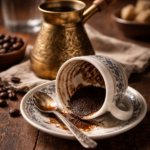
There are ways of knowing that don’t arrive through logic. Sometimes it arrives at the bottom of a cup. They surface instead in images—fleeting, symbolic, half-formed—asking not to be solved, but to be seen. While many are familiar with “reading the tea leaves,” it is often dismissed as superstition or novelty, but at its core, it… [Read More]