
 Reflection, Formation, and the Learning That Shapes Us
Not long ago, another therapist reached out with interest in one of my courses. She loved the topic. It sounded exactly like what she had been looking for. Then came the inevitable question.
“Will it count for CE in my state?”
When she discovered the answer was probably no, the conversation ended.
I understood completely.
Continuing education isn’t optional for most helping professionals. We have licenses to maintain, renewal deadlines to meet, employers who reimburse only certain providers, and budgets that don’t always leave room for learning simply because we’re curious. I would never suggest that competency doesn’t matter. It does. Our clients deserve knowledgeable, ethical practitioners who continue learning throughout their careers.
But after that exchange, I found myself wondering about something else.
When did we become so conditioned to ask, “Does it count?” before asking, “Will it change me?”
That question has stayed with me because, if I’m honest, some of the most important learning experiences of my professional life never counted toward anything at all.
When I enrolled in Reiki training years ago, there wasn’t any continuing education attached to it. I wasn’t looking for license renewal hours. I wasn’t trying to earn another credential. I was struggling with my own health and was simply drawn to learn something I didn’t yet understand.
The same was true when I studied aromatherapy. I certainly wasn’t looking for LMHC continuing education. I wanted to understand the plants, the chemistry, the history, and the subtle ways aroma seemed to influence memory, emotion, and healing. Later came neo-Jungian studies, spiritual direction, and other learning experiences that had little to do with checking a professional box and everything to do with following an inner curiosity.
Looking back now, I realize those courses gave me far more than information.
They formed me.
That word—formation—has become increasingly meaningful to me over the past few years. In some professions and traditions, particularly spiritual direction, it’s a familiar word. In counseling and coaching we tend to talk about professional development, identity, or transformation. Different language perhaps, but pointing toward something similar.
Competency is about what you can do.
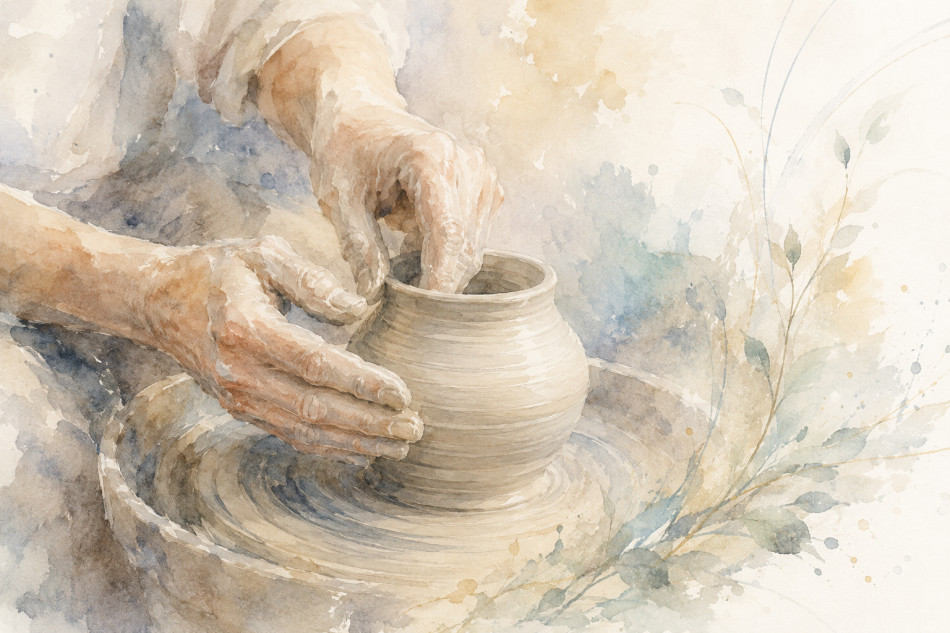
Formation is about who you become while doing it.
We need both.
Competency protects the public. It reflects our commitment to ethical practice and lifelong learning. It ensures we remain current, informed, and capable. But competency alone doesn’t necessarily change how we listen, how we tolerate uncertainty, how we sit with suffering, or how we understand ourselves in relationship to the people we serve.
Formation happens somewhere else.
It happens in the quiet space where new knowledge encounters lived experience. It asks questions that don’t appear on licensing exams.
- What is this learning asking of me?
- Where does it challenge my assumptions?
- What do I need to let go of?
- Who am I becoming because of what I’m learning?
Over the years, I’ve realized this understanding quietly found its way into my teaching.
People sometimes ask why so many of my courses include reflective writing. Why not simply present the information, administer a quiz, and move on?
Because I’ve never believed that’s where learning ends.
In many ways, that’s where learning begins.
Reading, listening and viewing introduces an idea. Reflection invites us into conversation with it. Writing slows our thinking enough for us to notice what is happening beneath the surface. We begin to recognize patterns, assumptions, questions, and possibilities that would otherwise pass unnoticed. The page becomes a mirror, revealing not only what we think but how we think.
That’s why, in many of my more in-depth courses, students don’t simply submit assignments. They write reflections. I read every one of them and respond—not as someone grading a paper, but as someone accompanying another helping professional as they make meaning of what they’re learning.
Over time, I’ve come to realize that my feedback isn’t simply evaluation.
It’s part of the learning itself.
The process resembles therapeutic writing in many ways. Language helps us organize experience, discover meaning, and bring vague impressions into clearer awareness. Yet the purpose isn’t therapy. It is professional formation. Reflection becomes the bridge between acquiring knowledge and integrating wisdom.
Perhaps that’s why students so often tell me, “This course changed me.”
Rarely do they begin by talking about a particular lecture or article.
Instead they say things like, “I never thought about it that way before,” or, “I realized something about myself,” or, “This has changed the way I show up with my clients.”
That’s formation.
Increasingly, I find myself less interested in asking what a helping professional knows and more interested in wondering who they are becoming.
After all, most of us entered this work because we wanted to make a difference in the lives of others. Somewhere along the way, it’s easy to forget that our own growth remains part of that calling. The courses that have shaped me most weren’t always the ones that added another credential after my name. They were the ones that expanded my capacity for presence, curiosity, discernment, and wonder.
So yes, continuing education matters.
Competency matters.
Ethics matter.
But perhaps we also need to give ourselves permission, every now and then, to learn something that won’t necessarily satisfy a licensing board but might nourish the person who holds the license.
Because there comes a point in every helping professional’s career when another technique is helpful, another theory is interesting, and another certification has its place.
But what our work quietly asks of us is something deeper.
It asks us to keep becoming.
And sometimes, the education that changes us most is the education that never counted at all.
Support My Writing
I write because I have things I want to explore, question, and share, and much of that writing lives here freely. If my work has resonated with you or given you something to think about, your support helps me keep doing it.