

It started with a passing news headline about Starbucks closing retail locations. I’m not sure why that trivial item caught my eye, except that it nudged open an old door to a time before there was coffee shop on every corner. I suddenly found myself trying to remember the name of a specific coffee shop… [Read More]
Meditation in Ordinary Moments
There is certainly no shortage of information about meditation. We can find instructions for mindfulness meditation, guided meditation, walking meditation, transcendental meditation, visualization, breathwork and any number of contemplative practices rooted in spiritual and religious traditions. There are apps to guide us, teachers to teach us and entire retreats designed to help us become better… [Read More]
Give Me the Story, Not the Label

Recently, someone asked me how a parent might prepare for a custody or parental fitness evaluation. I have conducted many evaluations and while it has been a long time since I sat in the evaluator’s chair, the question brought me immediately back to something I learned doing that work: describe the behavior rather than diagnosing… [Read More]

The Impression Is Not the Intervention
I teach intuition, but I also teach discernment. For these reasons, the two belong together: suggestibility, and therapist power. When therapists, coaches, healers, and spiritual guides begin trusting their intuition, there can be an understandable impulse to share what arrives. A felt sense, image, word, or sudden knowing may seem important. Sometimes it is. But… [Read More]
Therapist, Coach, or Both? A Values Clarification Exercise

Over the past several years, I’ve noticed an increasing number of licensed mental health professionals exploring coach training. Some are curious about adding coaching competencies to their clinical work. Others are considering leaving psychotherapy altogether. Still others are attracted by the flexibility that coaching appears to offer. The reasons are understandable. Therapists speak of burnout,… [Read More]
Creative Writing, Aromatherapy, and Young People
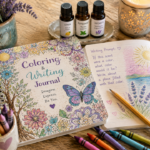
Recently, a few therapists have asked me if I would share some of the essential oils and writing prompts I use in my work. Most speak about working with adults but a few therapists who work with children and adolescents have also asked, seeking creative ways to support the young people in their practice. I… [Read More]
How Professionals Keep Becoming
Reflection, Formation, and the Learning That Shapes Us Not long ago, another therapist reached out with interest in one of my courses. She loved the topic. It sounded exactly like what she had been looking for. Then came the inevitable question. “Will it count for CE in my state?” When she discovered the answer was… [Read More]