

The phrase plant medicine has become increasingly associated with psychedelics, ceremonial traditions, and altered states of consciousness. Yet there exists another branch of plant medicine that is far gentler, and woven into daily life: aromatic plant medicine. From sacred resins and incense to fragrant herbs and essential oils, aromatic plants have accompanied humanity’s healing, reflective,… [Read More]
Scent Memory in Therapy: Olfactory Somatics

Scent memory is one of the most immediate and evocative forms of memory recall. In therapy, a single aroma can transport a client into an earlier emotional or sensory experience—often without conscious effort. Scent memory is a powerful clinical tool. Learn how to use olfactory somatics, embodied active imagination, and essential oils in therapy to… [Read More]
Psychic Boundaries as Psychological Boundaries

When we begin talking about “psychic boundaries,” it can be tempting to place the conversation entirely in the realm of the energetic or paranormal. But from a Neo-Jungian perspective, we might understand these experiences as expressions of the psyche itself—how we differentiate self from other, inner from outer, and conscious from unconscious. Before we ever… [Read More]
AI, Projection, and the Psychology of Meaning

In recent years, many people—practitioners included—have begun engaging artificial intelligence not merely as a productivity tool, but as a conversational partner. AI conversations are becoming increasingly common. For some, these encounters feel surprisingly alive, meaningful, even numinous. Questions arise: Is something conscious on the other side? Is this imagination? Projection? Or something else entirely? From… [Read More]
Sitting at the Threshold: Liminal Space in Therapeutic Practice

There are moments in therapeutic work when the familiar structures soften. A client has outgrown an old story, but the next chapter hasn’t revealed itself. A session slows, language thins, and something unnamed begins to stir beneath the surface. This is the liminal space—the threshold where we are no longer anchored to what was, yet… [Read More]
Tuning the Human Instrument: Shadow Work Through a Pure Soul Lens

If the soul is pure frequency, then the ego is the radio trying to tune into it—sometimes catching the song clearly, sometimes lost in static. The human condition is that static: the noise of fear, defense, and misremembering that comes with embodiment. This is about tuning the human instrument and experiencing shadow work through a… [Read More]
Depth Work in Addiction Counseling: Beyond Behavior Change

Addiction counselors know that recovery is never just about stopping a behavior—it’s about understanding what drives it. While evidence-based methods such as CBT, motivational interviewing, and relapse prevention remain foundational, many substance abuse professionals are rediscovering the power of depth-oriented approaches that reach beyond symptoms to the soul of addiction. This is about combining depth… [Read More]
The Clair Senses Through a Neo-Jungian Lens
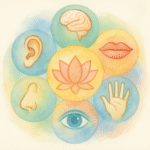
In coaching and therapy, intuition often whispers before it speaks. A sudden image, a phrase that lands just right, or a tingling awareness in the body—these subtle experiences are sometimes called the clair senses: clairvoyance, clairaudience, clairsentience, clairalience, clairgustance, and claircognizance. We’ll discuss reclaiming symbolic ways of knowing in coaching and therapy and look at… [Read More]