

The landscape has changed. One of the more interesting conversations that should be happening in the mental health profession right now has very little to do with psychotherapy itself. Instead, it has to do with supervision. For the past several years, much of the professional discussion has focused on telehealth, interstate practice, workforce shortages, reimbursement… [Read More]
Is Therapeutic Writing Evidence-Based?

Therapeutic writing is often associated with journaling, reflection, or creative self-expression—but its roots run much deeper than many realize. Long before mental health apps and online coaching platforms, researchers and clinicians were exploring the psychological and relational power of the written word as a pathway toward healing, insight, and emotional integration. Today, therapeutic writing continues… [Read More]
Cyberspace as Culture in the Age of AI

More than fifteen years ago, Kate Anthony and I wrote about cyberspace not simply as a communication tool, but as a culture unto itself- Cyberspace as Culture. At the time, many helping professionals still viewed online interaction as somehow “less real” than face-to-face connection. Relationships formed online were often dismissed as superficial, artificial, or psychologically… [Read More]
The Ethical Use of AI in Clinical Supervision

Let’s talk about the ethical use of AI in clinical supervision, within a cultural, legal and clinical framework. Artificial intelligence is already part of the supervision landscape. Supervisees are using AI to draft case summaries.Clients are consulting AI for mental health advice.Practitioners are experimenting with AI-assisted documentation and treatment planning. The question is no longer… [Read More]
AI, Projection, and the Psychology of Meaning

In recent years, many people—practitioners included—have begun engaging artificial intelligence not merely as a productivity tool, but as a conversational partner. AI conversations are becoming increasingly common. For some, these encounters feel surprisingly alive, meaningful, even numinous. Questions arise: Is something conscious on the other side? Is this imagination? Projection? Or something else entirely? From… [Read More]
Our Digital Personas and the Path to Inner Healing
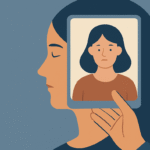
Most of us create digital versions of ourselves without giving it much thought. Maybe it’s a gaming character, an avatar in a virtual world, or the carefully curated image we present on social media. Yet these digital personas often reveal far more than we realize. They can act as mirrors to our unconscious — holding… [Read More]
Virtual Alchemy and the Inner Child

What if healing didn’t require a couch or a softly lit room—but instead unfolded in a meadow full of poppies and shasta daisies, where a girl named Wendy turned twelve in a world crafted entirely by imagination? When an inner child shows up inworld, the potential for virtual alchemy exists. Listen to a case study… [Read More]
Online Coaching and Therapy: Giving Rise to Numinous Moments

When participants in an online session connect—whether through video, voice, or even text—they encounter something quietly profound: presence. This isn’t just metaphorical—it’s a measurable, felt sense of being-with that digital theorists have long explored. Lombard and Ditton (2006), whose work informed much of the early thinking around presence in virtual spaces, help us understand this… [Read More]